
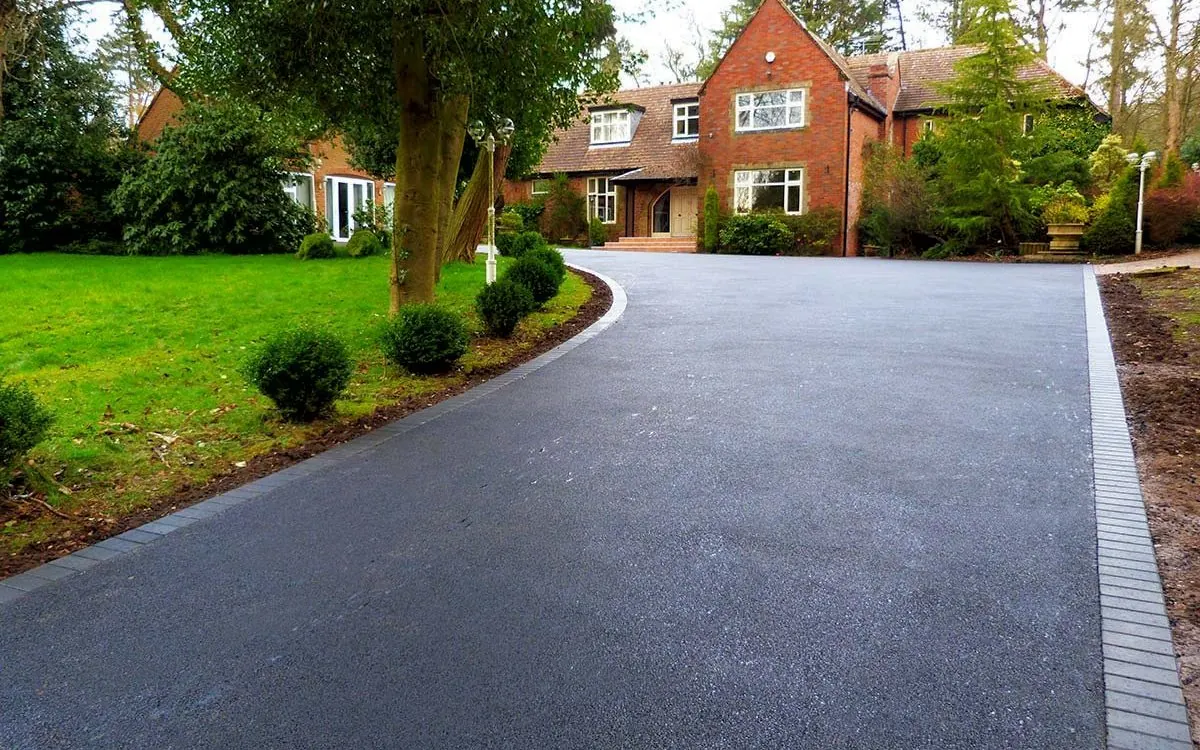
Tarmac Driveways in Durham
New tarmac driveways, resurfacing and tar and chip finishes for homes and commercial premises, built to last and finished the way you want them. Serving Durham and the surrounding County Durham area, call 0191 206 9045 for a free site visit and no-obligation quote.
Call 0191 206 9045How soon do you need it?
Selected: Tarmac Driveways
Reviews
What our customers say
Tarmac Driveway Specialists Durham
Few places ask more of a driveway than a cathedral city built on a steep bend of the River Wear. Inside the historic core around the Cathedral and Castle the streets are narrow, some are cobbled, and a tipper often cannot get anywhere near the front door. Out at Framwellgate Moor, Belmont and Gilesgate the picture changes to suburban semis and estates, while in Brandon and Bowburn there is 1960s and 70s housing where the first drive is now on its second or third surface. Period stone and newer brick sit side by side, and the slopes mean levels matter on almost every job.
Welch Surfacing install, resurface and repair tarmac driveways across Durham and the surrounding villages, from a single space beside a terraced house to a long sloping drive in Pity Me. We plan the access before the dig, think hard about falls and retaining edges on hillside plots, and flag early what the planning rules and the city's heritage designations mean for surfacing a front garden. Living close to a World Heritage Site is a privilege, though it can bring extra paperwork.
Free site visit and a written, itemised quote with the build up specified in writing.
What We Do
Our tarmac driveway services in Durham
New tarmac driveways
a first drive for a semi at Belmont or Framwellgate Moor, or a full replacement on a sloping plot, dug out and built up from formation level
Driveway resurfacing
for a Durham drive whose top has gone grey and thin but whose base is still level and sound
Full excavation & rebuild
where a drive laid thin on a hillside plot has slumped, rutted and pulled away at the edges and has to come out
Repairs & patching
for potholes, cracks and sunken patches where winter water has got into a worn surface on a slope
Widening & extensions
for a second car on a suburban plot, or a wider mouth so you can turn on the drive rather than reverse onto a steep road
Block paved borders & aprons
to frame the tarmac and match the character of a period or stone-fronted house, with a tidy apron at the footway
Coloured tarmac finishes
where plain black would look heavy against Durham stone, buff brick or a pale rendered semi
Drainage
so run-off from a sloping drive does not rush onto the footway or pool against the house at the low point
Kerbing, steps & level changes
where a drive climbs from a hillside road, meets a retaining wall or has to step up to a doorway
We cover Durham and the surrounding suburbs and villages, including Framwellgate Moor, Belmont, Gilesgate, Bowburn, Brandon and Pity Me.
Design & Finishes
Tarmac driveway ideas and finishes
People in Durham tend to ask whether black tarmac will clash with stone and heritage surroundings, and whether a plain drive suits a house near the historic core. The answer is usually yes, provided the edges are crisp and one contrast material does the talking.
Block paved borders and edgings
Where a Durham house sits in warm stone, a border of buff or sandstone-toned blocks echoes the walls, while graphite suits a newer Framwellgate Moor semi. On a sloping plot the border also acts as a retaining edge, stopping the tarmac creeping downhill and crumbling at the verge.
Aprons and thresholds
The point where a drive leaves a Durham hillside road takes the most turning and braking load, so a setts or block apron there protects the edge. A band at the garage or porch ties the drive to the house, which is useful where the levels step and the tarmac would otherwise meet the building abruptly.
Inlays and detailing
A single block strip across a sloping drive can double as a visual break between levels, and a soldier course around a gully gives a tidy finish for very little. In a city with this much visual heritage, quiet detailing sits better than anything bold, and fussy patterns age quickly.
What makes a tarmac drive look modern
Restraint one contrast material, one colour of block, clean straight lines
Crisp edges with a proper restraint rather than tarmac feathering out into a lawn or border
Charcoal or graphite blocks rather than multi tonal blends
Planting kept off the surface with a defined border rather than shrubs overhanging the tarmac
Drainage designed in with a channel drain sitting flush and square rather than added later at an angle
Levels that work so water runs away from the house and the drive meets thresholds cleanly
Colour Options
Coloured tarmac driveway installers in Durham
Colour questions in Durham usually come from owners wanting a drive that respects stone, slate and heritage surroundings rather than shouting against them, and there are two routes to it that behave very differently.
Pigmented & coloured aggregate
Carry the colour through the wearing course itself, so wear does not immediately expose black underneath. They cost more than standard black tarmac.
Surface applied coatings
Cost less initially but sit on top of the surface, so they wear through at tyre contact points and generally need reapplying periodically.
An honest note on colour: coloured tarmac fades. Ultraviolet light, weather and tyre wear all lighten and dull pigments over time, and red is the most noticeable for this. It also shows tyre marking, oil and moss more visibly than black does. None of that means you should not choose it, and plenty of people are very happy with a red or buff drive, but anyone who tells you a coloured finish will look the same in ten years is selling rather than advising. If long term appearance with minimal upkeep is your priority, standard black tarmac with a contrasting block border is the more forgiving choice.
Transparent Pricing
How much does a tarmac driveway cost in Durham?
A Durham driveway is priced after a visit, because slope, ground and reach are what move the figure and a photograph shows none of them. Narrow streets, steep gradients and awkward turns near the older core can decide whether a digger and tipper fit at all, so we look at the approach with you before committing to a price.
What drives the cost
Area, priced per square metre, and the rate falls as the area grows because setting up, plant and haulage are largely fixed regardless of size
Excavation depth, a drive built to a proper depth needs the ground taken out to suit. Shallow digs are cheaper and fail sooner
Ground conditions, soft clay, made ground, tree roots or an old concrete slab underneath all change the work required
Spoil removal, excavated material has to be carted away and disposed of, a real cost line that cheap quotes often omit
Access, whether a machine and a tipper can reach the drive, or whether material has to be barrowed through a gate
Sub base depth and material, specified for the traffic the drive will actually carry
Tarmac depth and layers, whether you are getting a binder course and a wearing course or a single thin layer
Drainage, channel drains, gullies, soakaways and permeable build ups where water cannot run to a border or lawn
Edgings and borders, block paving, kerbs and concrete haunching, priced per linear metre
Coloured or specialist finishes, in place of standard black
Extras, steps, level changes, gate posts, manhole cover adjustment and removing an old wall or planting
How to compare quotes properly
Driveway quotes are notoriously hard to compare because the cheap ones and the sound ones look identical on a single line reading “supply and lay tarmac driveway”. Ask every contractor for the same three things in writing:
- The excavation depth and what is being done with the spoil
- The sub base material and its compacted depth
- The tarmac layers and depths stated separately for binder course and wearing course
A cheaper price achieved by digging shallower and laying thinner is not a cheaper Durham driveway, it is a shorter one, and on a slope a thin build slumps and its edges break away sooner than on level ground. Our quotes state all three as standard, so each Durham figure you compare is for the same specification.
Which Surface
Tarmac, resin or block paving: which is right for your drive
We install tarmac, and on a Durham property we will say plainly when another surface would suit better. A listed or period house in the old core has different needs from a Belmont estate semi, so here is how the three stack up.
Tarmac
Best valueThe lowest cost per square metre and the quickest to lay, so you are without your parking for the shortest time, which matters where street parking is scarce. It handles cars and deliveries well, and later repair or resurfacing is simple and cheap. Plain black can feel stark beside stone, though a border fixes that, and as standard it is not permeable, so on slopes the falls and drains have to be designed with care.
Resin bound
Best lookingHandsome, with a smooth finish and aggregate shades that can pick up Durham stone and slate tones, so it suits some period frontages beautifully. Permeable when correctly laid on a suitable base. It costs well over tarmac and needs a sound bound base beneath, and on a steep drive the laying conditions are less forgiving, with repairs hard to hide.
Block paving
Most flexibleVersatile, with colours and laid patterns that can suit a heritage setting, and blocks can be lifted and relaid for access to services. Permeable types exist. It costs more than tarmac and takes much longer, so you lose use of the space for days. On a slope blocks can creep if the base and edge restraint are not right, and weeds and moss need regular attention.
Best value and most practical: tarmac
Best appearance if the budget allows: resin bound
Most design flexibility, most upkeep: block paving
Best of both for many houses: tarmac with a block paved border, which gets most of the visual benefit at close to tarmac cost
Spec & Depths
How thick should tarmac be on a driveway?
The ground under a Durham drive is rarely the same from one street to the next. Glacial clay, old quarry and made ground near the river and fill on the hillsides all turn up, and on a slope a weak foundation shows as a slump rather than just a crack. The tarmac is the thinnest part of a driveway that relies on the layers below.
Wearing course
A finer material giving the smooth finished surface you see and drive on.
Binder course
The load spreading layer of tarmac beneath the surface.
Sub base
Compacted crushed stone, laid and whacked down in layers. This is the layer doing the structural work, deeper where the ground is soft or the drive carries heavier vehicles.
The classic failure is a single 25mm or 30mm layer of tarmac laid straight over old hardcore, rubble or an existing surface with no sub base preparation. It looks perfect for a year, then cracks, ruts under the wheel paths and breaks up at the edges.
Depths on your drive depend on the ground, the existing construction and what will be parked on it. We confirm the specification in writing before any work starts.
Drainage
Drainage and permeable tarmac
On a Durham hillside plot, water takes the quickest route downhill, and that can be straight across a footway or into a neighbour's front garden. Run-off onto the highway is not acceptable and water ponding against a house wall does lasting harm, so we design the falls and drains before laying anything.
Falls to a permeable area the simplest and often cheapest solution, grading the drive so surface water runs to a lawn, planted border or gravel margin within your own property
Channel or linear drains set across the entrance or at the low point, connected to a soakaway or, where permitted, existing surface water drainage
Soakaways sized and positioned to take the run off, sited at an appropriate distance from buildings
Permeable tarmac build ups using an open graded surfacing over a permeable sub base, allowing water through the surface rather than across it
Sloping drives need particular care, since water naturally runs toward the house or the road, usually needing a channel drain at the low point and sometimes a threshold drain at the garage or door
On a Durham front garden, permeable construction or well designed falls can be the difference between needing planning consent and not, which leads into the next section.
Planning Rules
Do you need planning permission for a driveway?
Plenty of Durham front-garden drives go ahead without permission, but the city is full of exceptions, and the historic core makes it more important than usual to check before you commit.
Front gardens
Laying a new impermeable surface of more than five square metres between your house and the road generally requires planning permission. You will usually not need it if either the surface is permeable, or surface water is directed to a permeable area within your property such as a lawn or border. This is why permeable build ups and designed falls matter beyond just puddles.
Rear and side gardens
Hard surfacing to the rear of a property is generally treated differently and commonly falls within permitted development, though other conditions can still apply.
Dropped kerbs and vehicle crossings
Creating or widening an access across a public footway is a separate matter from planning and requires consent from the local highway authority, whatever the drive itself needs. Doing this without permission can lead to enforcement and the cost of putting it back.
Properties with extra restrictions
Conservation areas, listed buildings, new build estates with restrictive covenants and homes where permitted development rights have been removed can all need consent for work that would otherwise be permitted. Flats and maisonettes are also treated differently from houses.
Durham's conservation areas, the World Heritage Site setting around the Cathedral and Castle and the many listed and period properties are exactly where this catches people out, along with new-build estates with covenants. We say at the visit what we think applies and shape the drainage to avoid consent where that is achievable. We always recommend confirming your own situation with the local authority before ordering works.
Resurface or Rebuild?
Resurfacing and replacement in Durham
If you already have a tarmac drive in Durham, the question is whether only the surface has worn or whether the slope and the weather have worked on the layers below, because resurfacing a sound base costs a fraction of a rebuild.
The surface has worn out
- The surface has gone loose, grey and gritty, with stones coming away underfoot
- Fine surface cracking with no movement or stepping between the crack edges
- It looks tired and patchy but is still level, with no hollows holding water
- Shallow potholes that have not broken through to the layers below
The structure has failed
- Ruts or dips following the wheel paths where cars park
- Hollows that hold water in the same places after every downpour
- Interconnected cracking across an area, often described as looking like crocodile skin
- Potholes that keep coming back in the same place after being filled
- Edges crumbling away with nothing restraining them, so the drive is getting narrower
- Movement you can feel underfoot or see when a car drives over it
Where the surface does not tell the story, especially on a sloping drive, we look beneath it rather than guess. If resurfacing will give a good result we recommend it and say so in writing, even though a full rebuild would be the bigger invoice.
Repairs
Tarmac driveway repairs in Durham
Not every Durham drive needs replacing. We repair potholes, cracks, sunken areas, failed edges and the damage that opens around manhole covers and gullies, and on hillside plots we often find it is the downhill edge that has given way first.
Each repair is cut back square to sound material, the edges tacked so the new tarmac bonds, and the patch compacted in layers with the joint sealed, because a feathered edge lets water straight back in and a wet Durham winter will find it. A new patch looks darker than the weathered tarmac until it ages, so on a short drive it can be worth resurfacing the whole area instead.
Lifespan & Care
How long does a tarmac drive last?
A properly built Durham drive commonly lasts fifteen to twenty years or more before resurfacing, and the sub base lasts longer again. On a sloping site the difference comes from the build up, the falls and keeping water moving off the surface rather than through it.
The first few weeks
- Stay off it until we say it is ready usually the same day once the surface has cooled, though we will confirm
- Avoid turning your wheels while stationary which scuffs and can lift the fresh surface, so roll slightly as you steer
- Vary where you park for the first few weeks rather than sitting in exactly the same spot
- Board under small, heavy footprints such as trailer jockey wheels, motorbike stands, caravan legs and scaffold feet
- Expect slight softening in very hot weather during its first summer, which is normal and does not mean anything is wrong
Longer term
- Keep water moving clear leaves and silt from channel drains and gullies, since blocked drainage is the single biggest cause of early failure
- Clean up fuel and oil spills promptly because diesel and petrol dissolve the bitumen that holds tarmac together and will leave a soft patch
- Deal with cracks and small holes early before water reaches the layers below and turns a cheap repair into an expensive one
- Pull weeds at the edges rather than letting them establish, since roots open the joint between tarmac and edging
- Wash it down occasionally with water and a stiff brush, or a pressure washer used carefully on a wide fan and not held close to one spot
On sealing: opinions in the trade are genuinely mixed. A good quality sealant can restore colour and add some surface protection, but it is not a fix for a structural problem and a poorly applied one can be slippery or peel unevenly. Our view is that a well built drive with working drainage does not need sealing to reach its expected life, and that money is better spent on the sub base at the outset. If you like the freshly laid look and want to reseal periodically, that is a reasonable choice, just go in knowing it is cosmetic rather than structural.
FAQs
Frequently asked questions
How long does it take to lay a tarmac driveway?
Where do we park while the work is going on?
How soon can we drive on the new surface?
Will you take the old driveway away?
Can you lay tarmac over our existing driveway?
Does tarmac go soft or sticky in hot weather?
Will weeds grow through it?
Does coloured tarmac fade?
Can you widen our existing drive rather than replace it?
Can you work in winter?
What happens if you find something unexpected when the old drive comes up?
Do we need to be at home while the work is done?
No Obligation
Get a free quote for your tarmac driveway
Whether you are replacing a drive that has broken up, surfacing a new one, or just weighing tarmac against resin and block paving, the site visit and quote cost nothing. We will look at the ground, the levels and the drainage, tell you what specification your drive actually needs and give you an itemised written price with no obligation in Durham.
Our Process
Our Tarmac Driveways process in Durham
The finish everyone sees sits on the preparation nobody sees, so we get the base right before we lay a thing.
Site visit & measure
We visit to measure up, check levels and drainage, and talk through finishes so the quote reflects exactly what you want.
Why Choose Us
Why Choose Welch Surfacing for your Tarmac Driveways
Homeowners want a driveway that looks smart, drains properly and lasts, laid by someone who turns up when they say they will and leaves the site tidy. We lay domestic drives to the same standard as our commercial surfacing.
- Properly excavated and compacted sub-base, not a thin skim
- Clean edge details and correct falls for drainage
- Standard, coloured and permeable finishes available
- Fully insured, with tidy, considerate working
- The same standard of work as our commercial contracts
Serving Durham
Tarmac Driveways across Durham & the surrounding area
Call our Durham team on 0191 206 9045 for a free site visit and quote.
Looking for a service other than tarmac driveways in Durham?
We provide a whole range of surfacing options for our Durham clients:
Not in Durham? Still looking for tarmac driveways near you?
Including Newcastle upon Tyne, Consett, Middlesbrough, Darlington, Harrogate and more: