
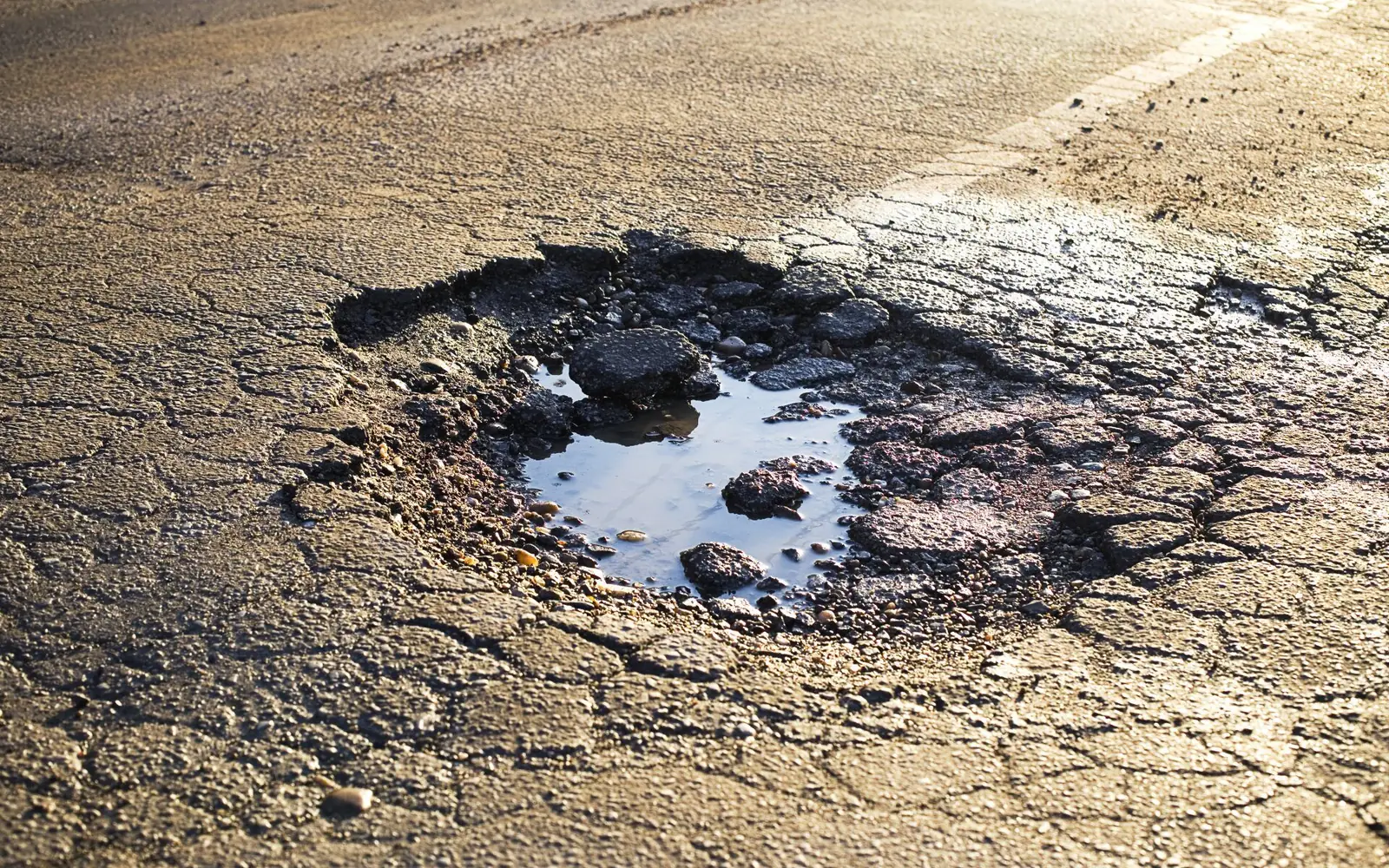
Pothole Repairs & Reinstatements in Darlington
Permanent pothole repairs and compliant reinstatements for roads, car parks and driveways, addressing the underlying cause so the defect does not simply reappear. Serving Darlington and the surrounding County Durham area, call 01325 506038 for a free site visit and no-obligation quote.
Call 01325 506038How soon do you need it?
Selected: Pothole Repairs & Reinstatements
Reviews
What our customers say
Permanent Pothole Repairs & Reinstatements Darlington
Darlington is a flat market and railway town, and its potholes tend to show up on ground that was never built for the loads now crossing it. The distribution and logistics yards near the A1(M), the Victorian terraced back lanes, the suburban private estate roads and the retail car parks all suffer when water gets into a surface and heavy vehicles do the rest. Many of these are lightly built private roads now carrying HGVs they were never designed for. A pothole is water damage before anything else: once water reaches the layers below it softens the base, then frost and traffic break the top open from underneath, which is why the holes grow and why last year's patches are so often back.
Welch Surfacing carry out pothole repairs and reinstatements across Darlington and the surrounding area, from the town-centre terraces and retail parks out to the logistics estates near the A1(M) and the suburban private roads, for private and estate roads, car parks, business premises, schools, farms and yards. We repair single potholes, batches spread across a site, and the deeper failures where patching has stopped working.
Free site inspection and an itemised written quote, with an honest answer on whether repairing is still the right call.
What We Do
Our pothole repair services in Darlington
Single pothole repairs
cut out square and permanently reinstated
Batched repairs
where multiple potholes across a road, car park or site are dealt with in one visit
Large & deep repairs
where the failure has broken through into the base layers
Planed & inlaid patches
for larger failed areas, giving a flush finish rather than a raised patch
Edge & joint repairs
where the surface is breaking away at an unrestrained edge or an old seam
Trench & utility reinstatements
following excavation for services
Ironwork repairs
around gullies, manholes and covers, which is where surfaces commonly fail first
Drainage investigation
where potholes keep returning in the same spot, because that is usually a water problem rather than a surfacing one
Typical Darlington jobs run from a logistics-yard surface failing under HGVs to a potholed back lane, an estate road and a retail car park.
Why Repairs Fail
Why potholes come back, and what a permanent repair actually involves
Most pothole repairs in Darlington fail for the same reason: the hole gets filled but the cause is left in place. Tipping material into a wet, dirty, irregular void and rolling it flat gives you something that looks finished and behaves like a lid. On a lightly built private road now taking HGV traffic that lid gives way fast. Water still works in around the edges, the base below is still soft, and the patch loosens from the perimeter inwards.
A permanent repair deals with the cause, not the symptom. Our method:
- 01
Cut out square to sound material
The failed area is saw cut or planed to straight vertical edges, extending beyond the visible damage to where the surface is genuinely sound. Irregular, feathered edges are the single most common cause of a repair failing early.
- 02
Excavate to the depth the failure requires
If the base is contaminated or soft, it comes out. Filling over a failed foundation guarantees a return visit.
- 03
Clean and dry the excavation
Loose material, silt and standing water all prevent the new material bonding.
- 04
Tack the edges and base
A bitumen tack coat bonds the new material to the old, sealing the joint that water would otherwise exploit.
- 05
Reinstate in compacted layers
Material is laid and compacted in appropriate layer thicknesses rather than as one deep dump, because deep single layers cannot be compacted properly through their full depth.
- 06
Seal the joint
The perimeter is sealed so the repair is watertight where it meets the existing surface.
- 07
Finish flush and to the correct falls
A patch that sits proud collects impact from every wheel that hits it. One that sits low collects water. Both fail early.
It is also why a bagged cold-lay mix from the merchant rarely lasts on anything carrying real traffic. It is useful for making something safe quickly, and we use similar principles for temporary work, but on a distribution yard or a road now taking lorries it is no substitute for a repair that is cut square, tacked and compacted.
Honest About Interim Fixes
Temporary repairs, and when they are the sensible choice
We will not pretend a permanent repair is always the right answer today. On a working logistics site there are times when getting a hazard made safe quickly matters more than getting it made perfect, and being honest about that is more useful to you than talking you into the bigger job.
A temporary or interim repair genuinely makes sense when:
- Something has become a trip or vehicle hazard and needs dealing with now, with the permanent repair programmed properly afterwards
- The surface is already scheduled for resurfacing, so investing in permanent patches would be spending twice
- Conditions are against a lasting repair, such as persistent wet or freezing weather, and the choice is between an interim fix and leaving it open
- Budget approval is pending and the hazard cannot wait for the paperwork
Where we carry out a temporary repair we tell you plainly that it is temporary, roughly how long it should hold and what the permanent repair will involve. What we will not do is charge you for a permanent repair and give you a temporary one, which is the usual complaint about the cheapest quote on the market.
Trench & Utility
Trench and utility reinstatements
Darlington's terraced streets and estates carry runs of water, gas, electricity, telecoms and drainage, and every excavation leaves a scar across the surface. Whether that scar disappears or becomes next year's pothole comes down to how it is reinstated. Trench edges are long, straight and continuous, which makes them an ideal path for water if the joint is not sealed properly, and the backfill below is the part nobody can inspect once the surface is closed.
Backfill and compaction in layers to suit the depth and the traffic the surface carries, since settlement over a poorly compacted trench pulls the surface down with it
Correct layer reinstatement with base, binder and surface courses reinstated to match the surrounding construction rather than simply capped
Sealed joints along the full trench perimeter which is the difference between a reinstatement that lasts and one that opens up within a couple of winters
Matching the existing surface as closely as the material allows in type, texture and level, including planing back where a neat, flush edge matters
Reinstatement around ironwork covers and chambers disturbed by the excavation
Failed or settled reinstatements put right whether they were ours or somebody else's
Worth being clear on one point: reinstatement in the public highway is governed by the statutory specification for road works and requires permits and notices through the highway authority, with defined standards and guarantee periods for whoever carried out the street works. On private land, private roads, car parks and commercial sites, you set the standard, and we will specify it in writing so there is no ambiguity about what you are getting. If your works involve the public highway, tell us at enquiry stage so we can confirm the correct route with you before anything is programmed.
Knowing When To Stop
When patching stops being worth the money
There is a point where repairing potholes is pouring money into a surface that has already failed, and you deserve to be told when a Darlington site has reached it. The signs that patching has become a false economy:
- The same potholes keep returning in the same locations despite being repaired properly, which points to drainage or a failed foundation rather than the repairs
- Crocodile cracking meaning interconnected cracks across an area, which is the surface telling you the structure below has gone
- Patches are becoming the surface once repairs are joining up across a stretch, you have more joints than surface, and joints are where water gets in
- Rutting or depressions alongside the potholes, which indicates deformation below rather than surface wear
- New potholes appearing faster than you can repair them which usually means water is moving freely through the layers
Where that is what we find we will say so and price the alternative, whether that is a planed and inlaid area, a section of resurfacing or a full rebuild on a yard that was never specified for the lorries now using it. Set five years of patching against one resurfacing job and the maths usually makes the decision obvious, and we would rather you saw that than kept calling us out.
Where & What
Where we repair potholes, and on what surfaces
Sites we work on
- Private roads, lanes and estate roads, including work commissioned by residents' associations and management companies
- Car parks for retail, offices, hotels, pubs and leisure sites
- Industrial units, yards, loading and service areas
- Schools, colleges and nurseries, with works programmed around term times and drop off periods
- Farms, agricultural tracks and rural access roads
- Long or shared driveways
Surfaces we repair
- Tarmac and asphalt cut, tacked and reinstated in compacted layers
- Concrete which fails differently from asphalt and needs the repair broken out to sound material with proper attention to the joint and cure time
- Block paving where the usual cause is a failed or settled bedding layer, so blocks are lifted, the base rebuilt and the blocks relaid rather than simply tapped back down
- Surface dressed and chipped surfaces repaired and finished to blend with the existing texture as closely as the material allows
Priority Response
Emergency and priority repairs
If you manage a site in Darlington that the public drives or walks across, a pothole is a foreseeable hazard, and once it has been reported to you the clock is effectively running. That applies to retail car parks, private and estate roads, school grounds and commercial premises just as much as to a public highway.
Where something needs dealing with quickly we can attend to make the hazard safe, then programme the permanent repair properly. We will also tell you honestly whether what you are describing needs a same-day response or whether it can wait for a scheduled visit, because batching repairs into one planned visit costs considerably less per pothole than repeated call-outs, and there is no sense paying emergency rates for something that is not an emergency.
Practical steps worth taking in the meantime: cone or barrier the defect, photograph it with a scale reference and the date, and record when it was reported to you. That protects you if a claim follows, and it gives us useful information before we arrive.
Transparent Pricing
How much do pothole repairs cost in Darlington?
We quote pothole repairs from an inspection rather than over the phone, because two potholes that look identical from above can need very different amounts of work once they are opened up, particularly on a road built lighter than its current traffic. Rather than a price per hole, expect pricing to reflect the visit and the volume of work in it.
What moves the cost on your site
How many repairs are in one visit, the biggest single factor. Mobilisation, plant and traffic management are largely fixed, so the cost per pothole falls sharply the more you batch together
Size and depth, of each repair, and how far the sound material sits beyond the visible damage
Depth of failure, a repair confined to the surface course is a different job from one requiring the base to be dug out and rebuilt
Surface type, with concrete and block paving generally more labour intensive than asphalt
Access, whether plant can reach the repairs and where the arisings go
Traffic management, whether the area can be closed or has to stay live
Timing, out of hours, weekend and emergency attendance carry a premium over a scheduled visit
Drainage work, where the reason for the failure needs addressing to stop it recurring
Every quote is itemised, so you can see what each element costs, defer anything non urgent and compare our price properly against any other. If you look after several sites, a scheduled programme across all of them is usually the cheapest way to keep on top of it.
Our Process
Our Pothole Repairs & Reinstatements process in Darlington
From first inspection to sign-off, a clear, methodical sequence so you know exactly what happens and when.
- 01
Inspection
We walk the site, mark up every defect, assess depth and cause where it is not obvious, and check drainage and ironwork while we are there.
- 02
Findings and recommendation
You get a schedule of the repairs, our recommendation on each, and a plain statement if any of it is not worth repairing.
- 03
Itemised quote
Priced by element and grouped so you can prioritise if you need to phase the spend.
- 04
Programme agreed
Date, duration, access arrangements and any notice to residents, staff or tenants sorted before we arrive.
- 05
Set up
Signage, cones and barriers out, pedestrian routes kept clear of plant.
- 06
Cut out and excavate
Repairs saw cut or planed square, excavated to sound material, arisings removed.
- 07
Reinstate
Excavations cleaned and dried, edges tacked, material laid and compacted in layers, joints sealed and levels finished flush.
- 08
Sign off
We walk the completed repairs with you, confirm when the surface can take traffic and leave a record of what was done where.
FAQs
Frequently asked questions
How quickly can you attend?
How long does a repair take, and how soon can we drive on it?
Do you need to close the car park or road?
Can you match the existing surface?
Why did our last pothole repair fail?
We have a lot of potholes. Should we still be repairing them?
Do you repair concrete and block paving as well as tarmac?
Who is responsible for potholes on a private road?
Can you carry out repairs in winter?
Can you take on repairs across several sites?
What happens if a repair fails?
Will you tell us if you find other problems while you are on site?
No Obligation
Book your free pothole inspection
Whether it is one hole that keeps coming back, a logistics yard that has gradually filled with patches, or a trench reinstatement that has settled and needs putting right, the inspection costs nothing. We will assess the site in Darlington, tell you what is actually wrong and give you an itemised written quote with no obligation.
Why Choose Us
Why Choose Welch Surfacing for your Pothole Repairs & Reinstatements
Whether you are a homeowner, facilities manager or local authority reporting a hazard, you need a contractor who will fix the problem properly, not just patch it.
- Trained and skilled operatives on every repair, working to recognised industry standards
- Fully insured for work on private, commercial and public sector sites
- Permanent repair as standard, not a default short-term patch
- Experience across surface types, including tarmac, asphalt and concrete
- Responsive scheduling, including priority handling for urgent or high-risk potholes
Serving Darlington
Pothole Repairs & Reinstatements across Darlington & the surrounding area
Call our Darlington team on 01325 506038 for a free site visit and quote.
Looking for a service other than pothole repairs & reinstatements in Darlington?
We provide a whole range of surfacing options for our Darlington clients:
Not in Darlington? Still looking for pothole repairs & reinstatements near you?
Including Newcastle upon Tyne, Consett, Durham, Middlesbrough, Harrogate and more: